Vanua Levu and Taveuni’s tourism future will be strongest when the healthy environments, rich cultures and communities that make the North distinctive are protected as investment grows.
Fiji’s first strategic, program-wide environmental and social assessment for tourism in the North is bringing together data collection, technical research and local knowledge into the decisions that will shape that future.
A reef is more than a beautiful view for a diver who travels from afar to Fiji’s northern region. It supports fisheries, protects a coastline, sustains livelihoods and forms part of the experience that brings a visitor to Vanua Levu or Taveuni in the first place. Similarly, a forest is more than a tourism attraction. It protects water sources, provides habitat for plants and wildlife, holds cultural meaning and supports the wellbeing of communities. A cultural site may be part of a community’s identity long before it becomes part of a visitor’s journey. These connections are among the reasons the North holds such promise as a tourism destination. They are also why decisions about tourism growth cannot be made by looking at visitor numbers, accommodation or infrastructure alone. Tourism can create jobs, strengthen local businesses and open new opportunities for communities. But if growth is poorly located, moves faster than essential services can support, or overlooks the values attached to land, water and cultural places, it can place pressure on the very assets that attract visitors and sustain local life. Protecting those foundations is therefore not separate from tourism development. It is essential to making tourism successful over the long term.
Looking at the whole destination before individual projects proceed
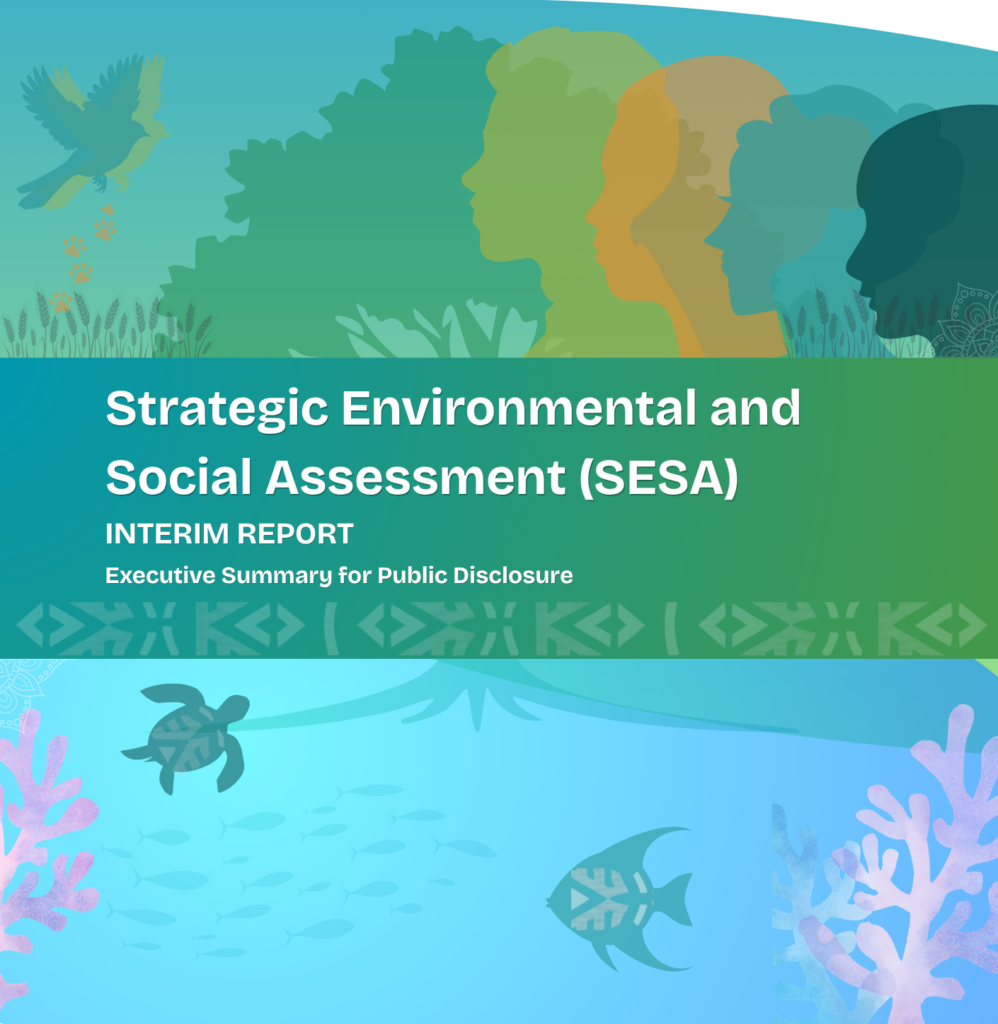
The Fiji Tourism Development Program in Vanua Levu (Na Vualiku Project) has been working hard to prepare an interim Strategic Environmental and Social Assessment (SESA) as the first stage of a phased assessment process. It is helping ensure that future tourism decisions are informed by environmental, social and cultural evidence at the outset.
It is the first assessment of its kind to look strategically and program-wide at tourism development across Vanua Levu and Taveuni.
In simple terms, the SESA looks at the bigger picture before individual investments are selected. It brings together information about natural systems, communities, livelihoods, cultural heritage and possible patterns of tourism growth. This helps identify opportunities, sensitive areas, potential risks and the safeguards that may be needed before major investment and infrastructure decisions are made.
This is different from an Environmental Impact Assessment (EIA) for a specific project. A project-level EIA examines a proposed development once its location and design are clearer. The SESA is a broader strategic assessment that precedes the individual projects and helps shape tourism priorities and planning before future projects reach the point of an EIA.
That early view matters because the effects of growth may not come from one development alone. Several investments within the same destination can gradually increase pressure on infrastructure, natural resources and communities. Looking across the whole destination makes it possible to consider these combined pressures before they become harder or more expensive to manage.
Where technical evidence meets local knowledge
Maps, data and previous studies can show where rivers, forests, coastlines, settlements and infrastructure are located. They cannot explain why a place matters, how it is used, what changes people have already observed, or what communities want future development to protect.
That knowledge rests with the people who live, work and care for these places.
Communities, resource owners, Government agencies, civil society organisations, tourism operators and other stakeholders have therefore contributed to the SESA throughout its development. Local knowledge helped identify values and concerns that technical research alone will never capture.
Work began in 2025 with a review of existing environmental, social and cultural information and the development of the assessment approach. Baseline investigations and stakeholder engagement continued through 2025 and 2026, allowing priority opportunities, risks, sensitive areas and community values to be identified.
In February 2025, 243 community members participated in consultations across Vanua Levu and Taveuni to identify the environmental, social and cultural priorities that future tourism development should recognise and protect. These priorities were incorporated into the SESA, helping ensure that the technical assessment was grounded in local knowledge and experience.
In February 2026, more than 100 participants joined SESA validation workshops in Labasa, Nabouwalu, Savusavu and Taveuni. They reviewed the emerging findings, confirmed key concerns and identified issues requiring further attention. This two-stage process, first gathering community priorities and then returning to stakeholders to validate how they had been reflected, strengthened the evidence that will inform future tourism planning, investment decisions and safeguards across the North.
Each stage built on earlier knowledge, checked what remained relevant, identified what had changed and strengthened the recommendations that will inform future decisions.
Moving safeguards into tourism decisions now
The value of the SESA is already extending beyond the preparation of a final document.
Early findings are being integrated into Fiji’s first Integrated Tourism Master Plan for Vanua Levu and Taveuni. This means that environmental and social considerations can shape tourism opportunities, infrastructure needs, investment priorities and destination management from the outset, rather than being added after priorities have been selected.
The same strategic evidence is also relevant to work being undertaken across the Na Vualiku Project, including airport and connectivity planning, sanitation and solid waste management, and the sequencing of possible future investments.
For example, an area may appear suitable for tourism growth, but the wider evidence may show that essential services need to be strengthened first, that a sensitive ecosystem requires additional protection, or that community and cultural considerations should influence how development is approached.
Bringing this information forward helps the Government understand not only where opportunity may exist, but what responsible implementation would require.
It also gives investors and tourism operators clearer information about possible opportunities, constraints and safeguard needs. Identifying these considerations early can reduce uncertainty, support better project planning and help avoid preventable impacts, costly redesigns or delays later.
Development and protection working together
Environmental and social safeguards are sometimes understood only as restrictions or approval requirements. In tourism, they also protect the value of the destination itself.
Healthy reefs and forests support the experiences tourism businesses offer. Clean waterways, coastlines and well-managed settlements influence how visitors experience a destination. Cultural heritage and community knowledge help nurture a destination’s personality and charm. Strong relationships with communities are essential to tourism that is locally grounded and able to endure.
Safeguards can therefore help development succeed. They allow risks to be identified earlier, help important places and values receive appropriate consideration, and support investment that is better matched to the capacity and character of each destination.
The SESA will guide decisions on future tourism development. It will help decision-makers consider environmental, social and cultural factors before major commitments are made, when there is still an opportunity to improve the location, sequence or approach.
From validated findings to long-term stewardship
Further validation and finalisation will continue through late 2026 and early 2027 so that the completed SESA reflects research, local knowledge and the tourism direction being developed for Vanua Levu and Taveuni.
The immediate output will be a strategic assessment and recommendations that Government and other decision-makers can use. The more important outcome will come afterwards: better-informed investment decisions, infrastructure sequencing and destination management throughout later phases of the Program and beyond.
The assessment will not guarantee that every concern is resolved, every recommendation is adopted or every proposed investment proceeds. Its role is to make important information visible early and help future decisions consider both opportunity and risk.
Its success will therefore not be measured simply by the completion of a report. It will be reflected in the decisions it strengthens: where tourism growth is encouraged, where greater care or further investigation is needed, what infrastructure should come first, how community priorities are recognised and how the North’s natural and cultural assets are managed over time.
Visitors may never hear the term “Strategic Environmental and Social Assessment”. They will experience its value through healthy destinations, authentic cultural experiences and tourism that respects the places they have travelled to see.
Communities will experience its value when their knowledge, livelihoods and heritage take priority in shaping the decisions that affect them. Tourism operators and investors will experience it through clearer information and destinations whose long-term appeal is protected.
That is how the SESA moves Vanua Levu and Taveuni closer to tourism that creates opportunity without losing what makes the North unique— tourism that lifts everyone and benefits all!