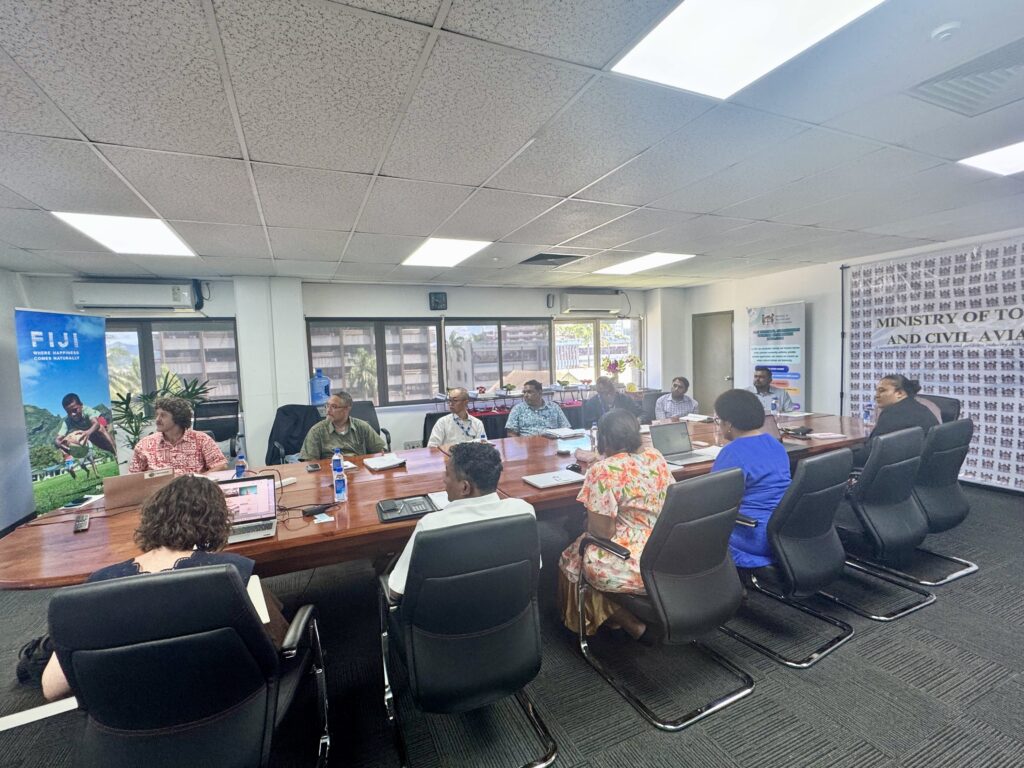
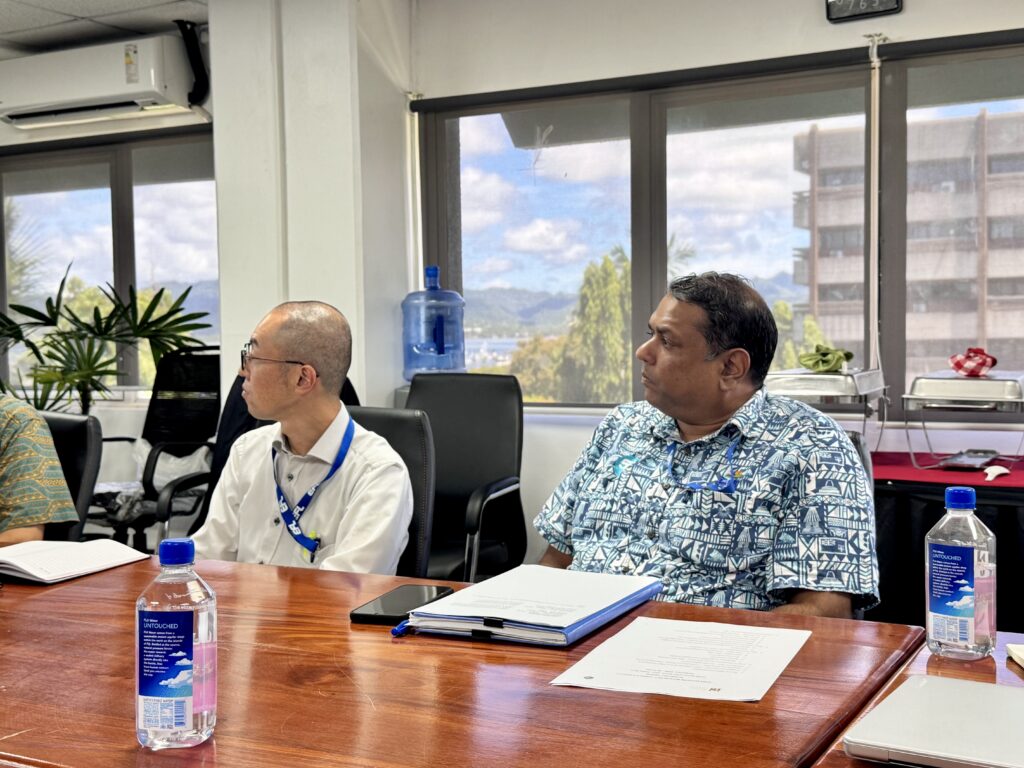
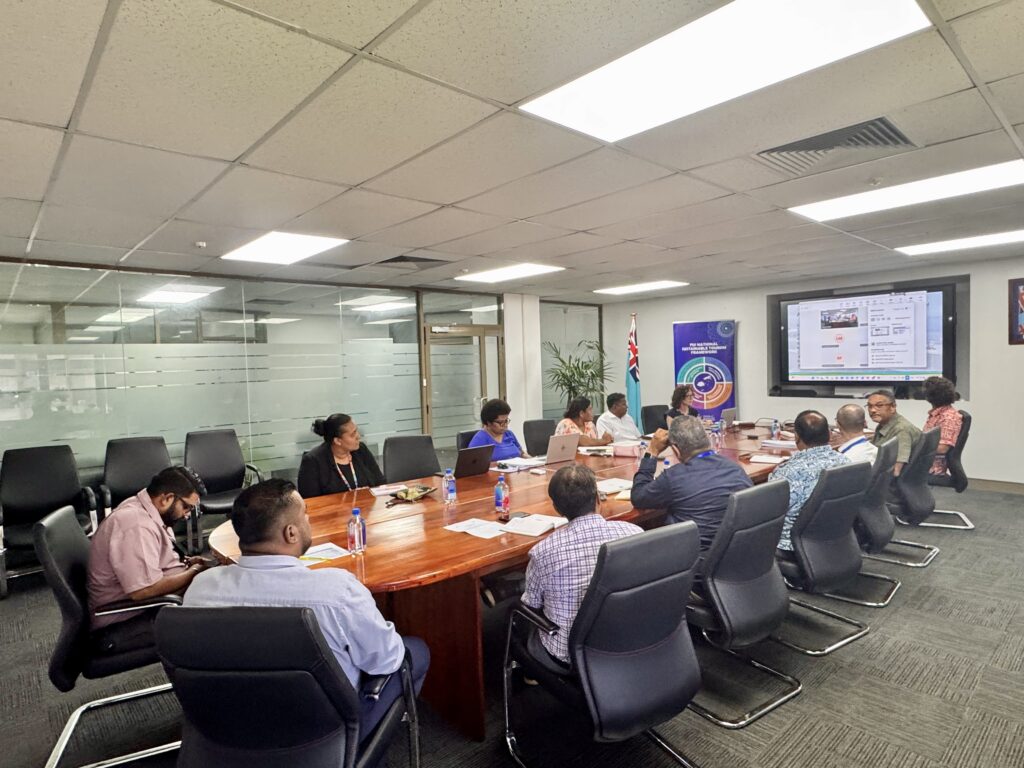
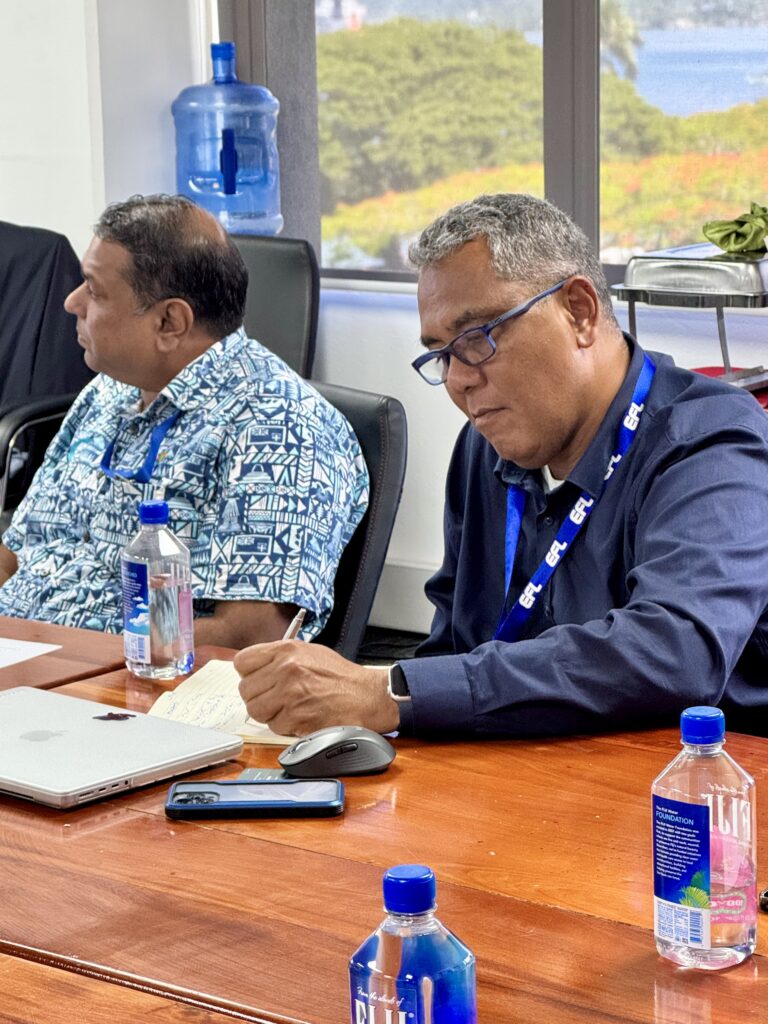
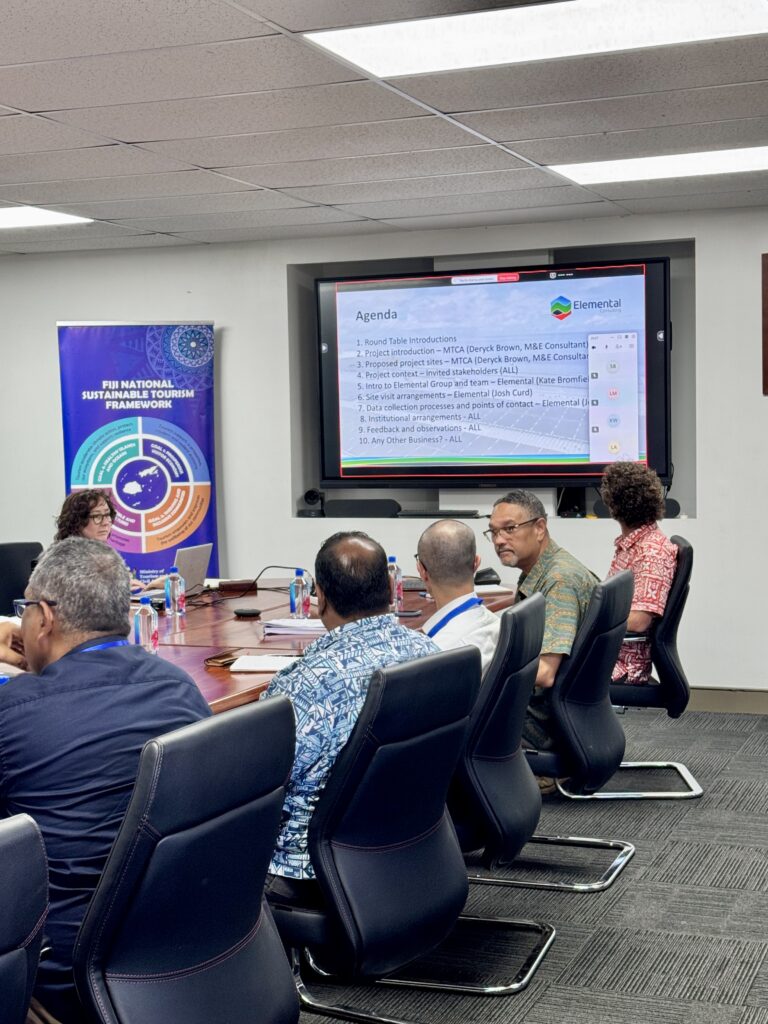
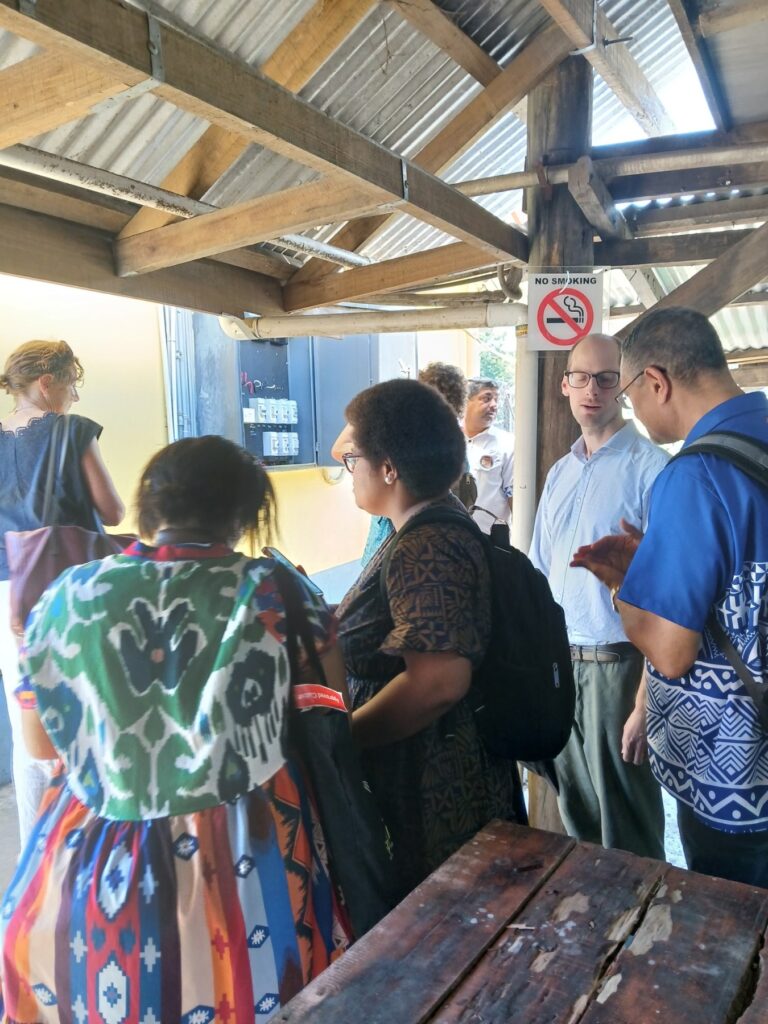
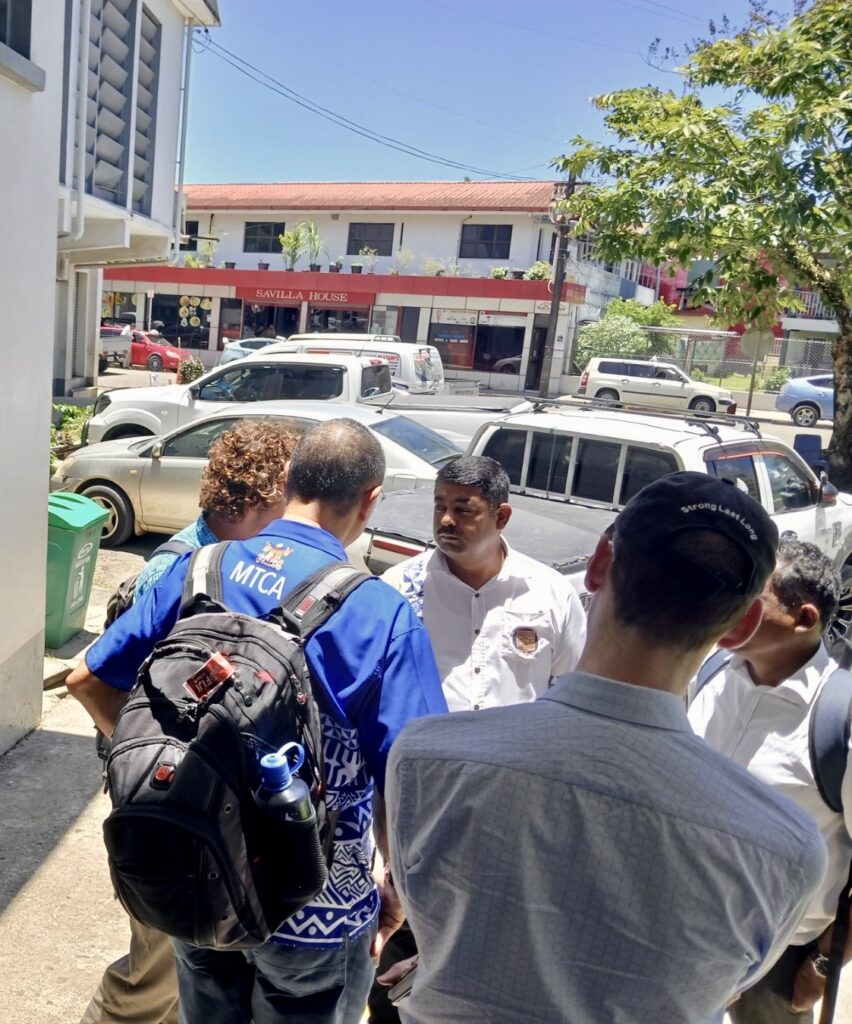
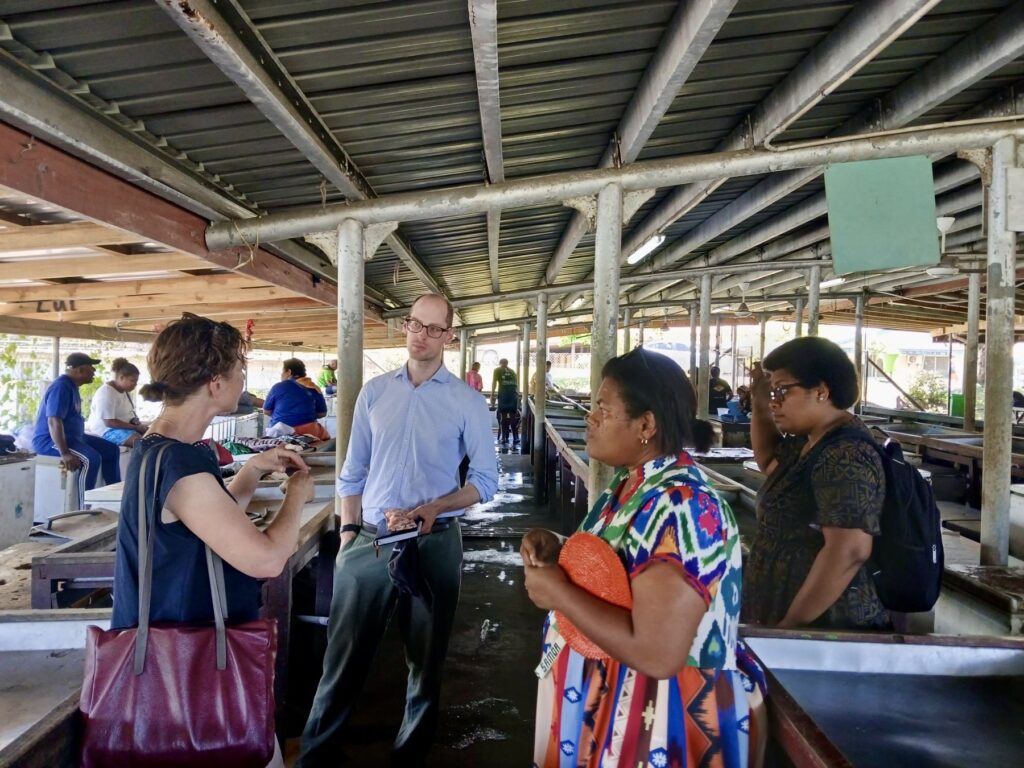
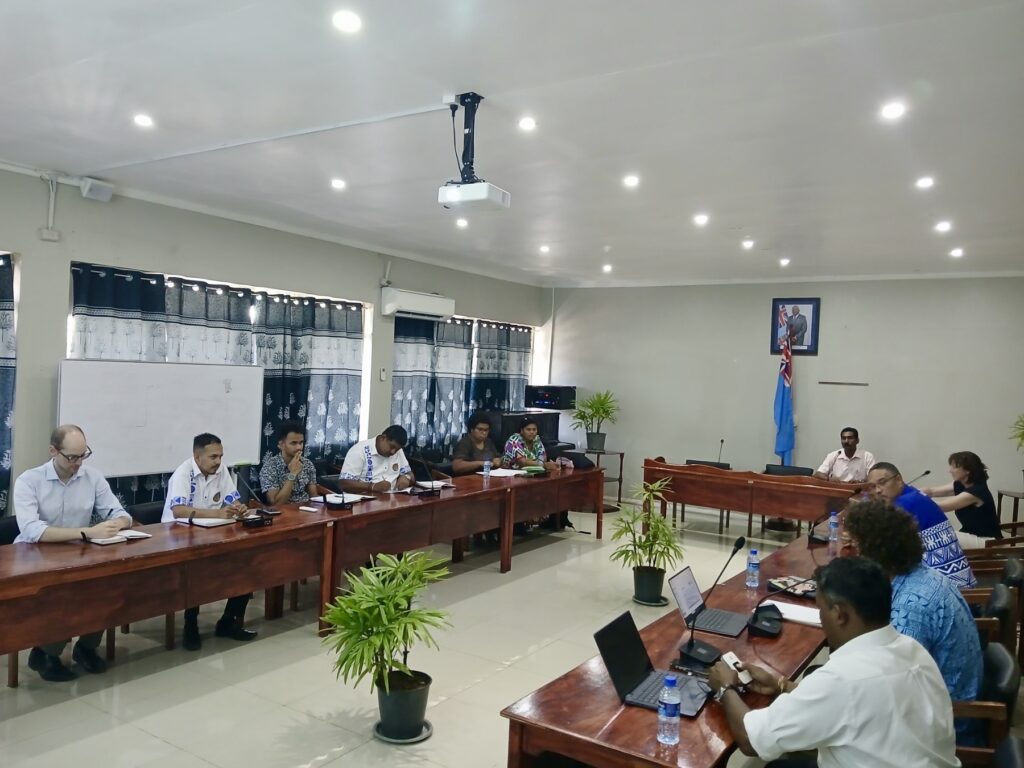
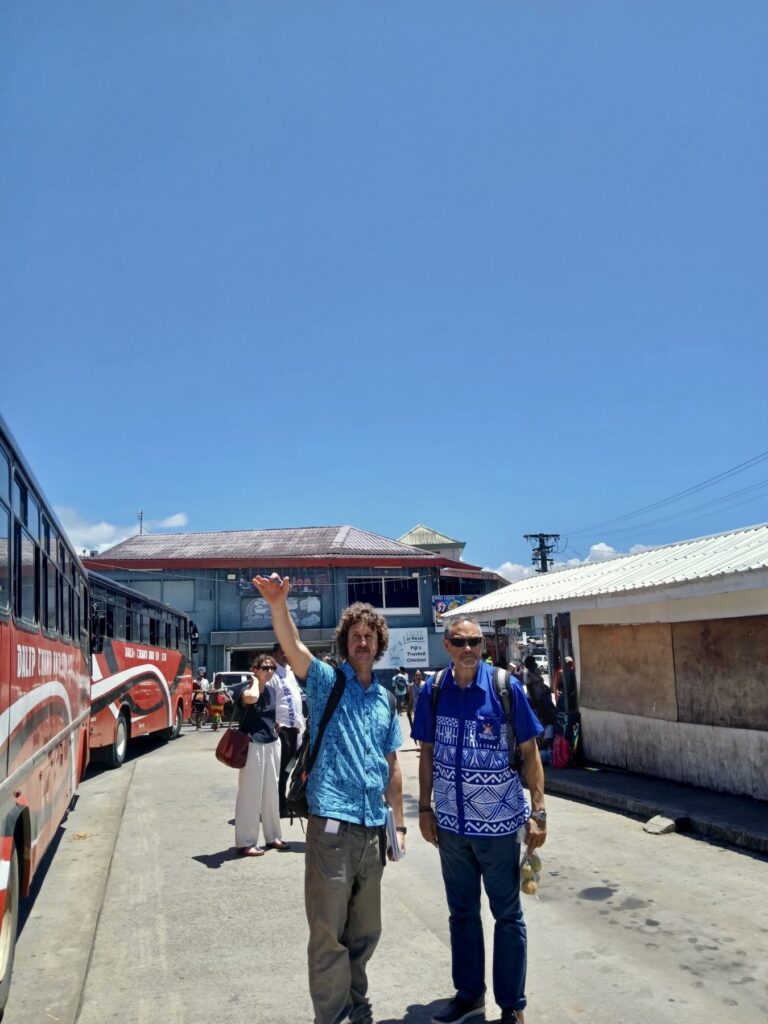
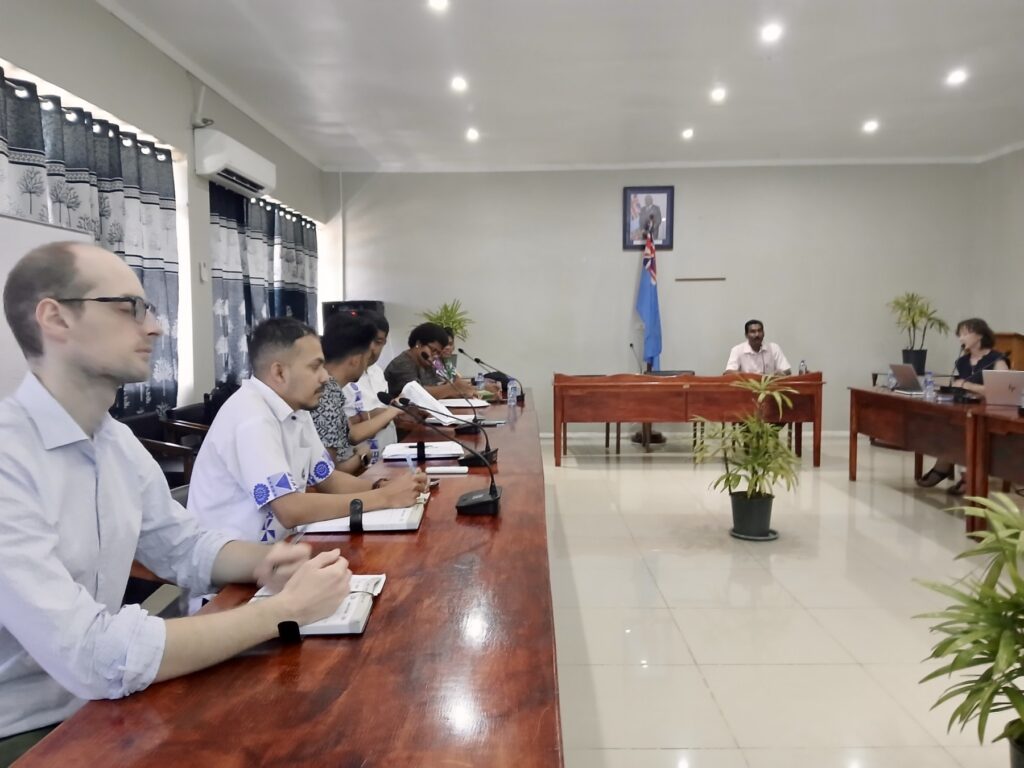
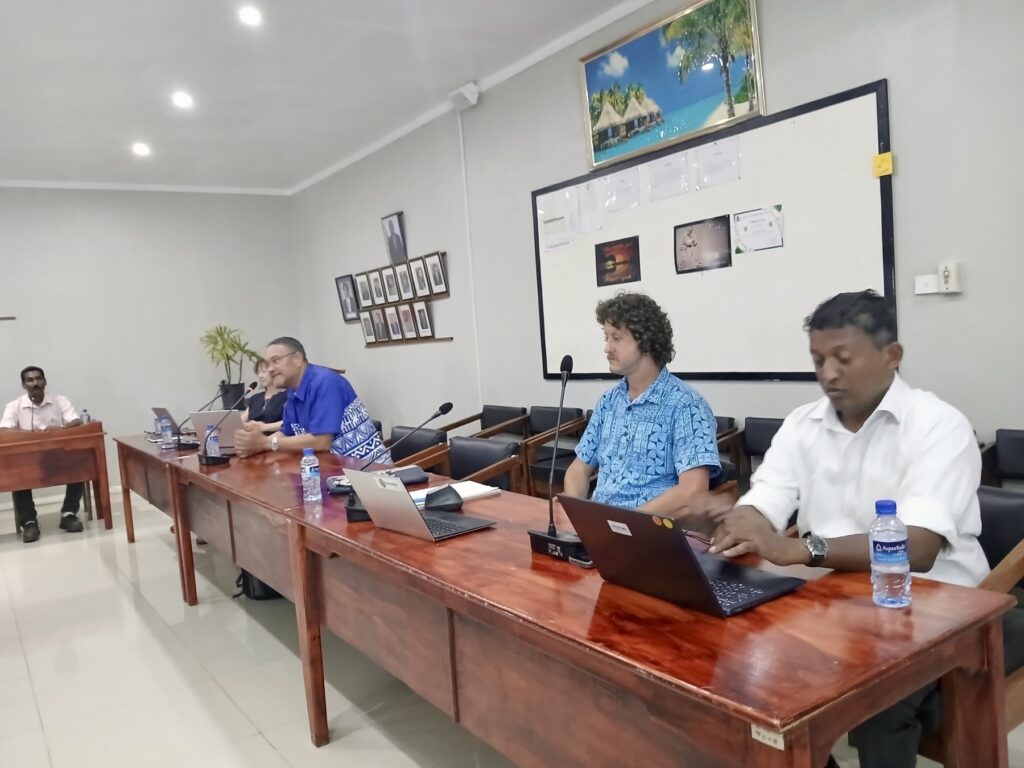
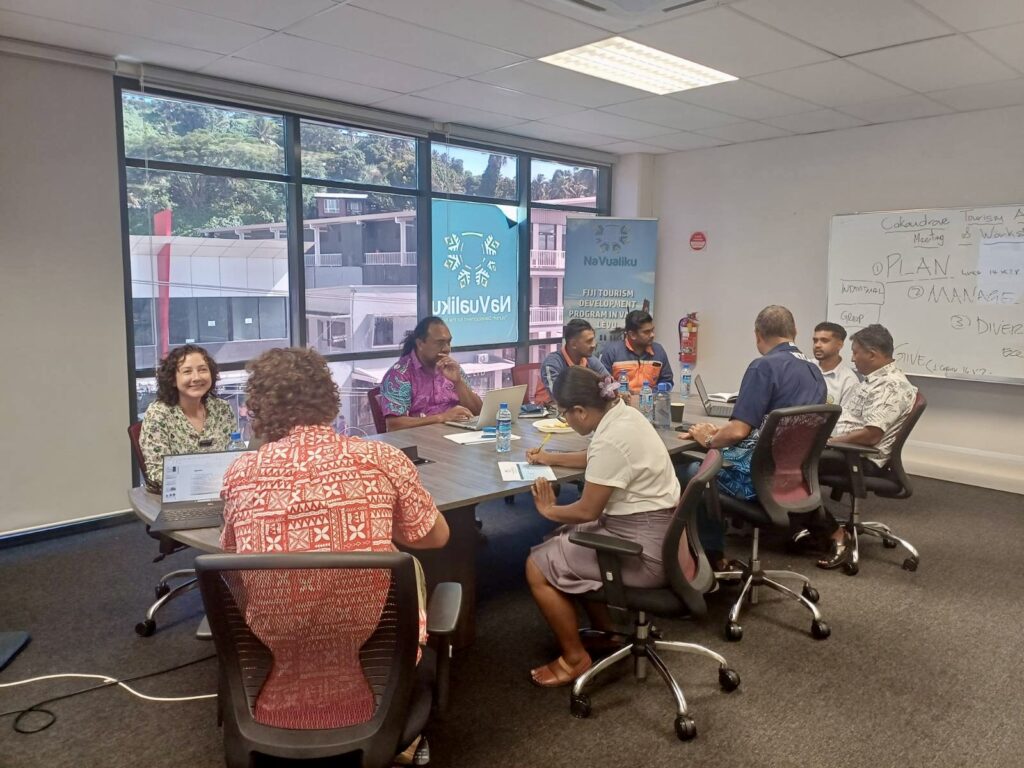
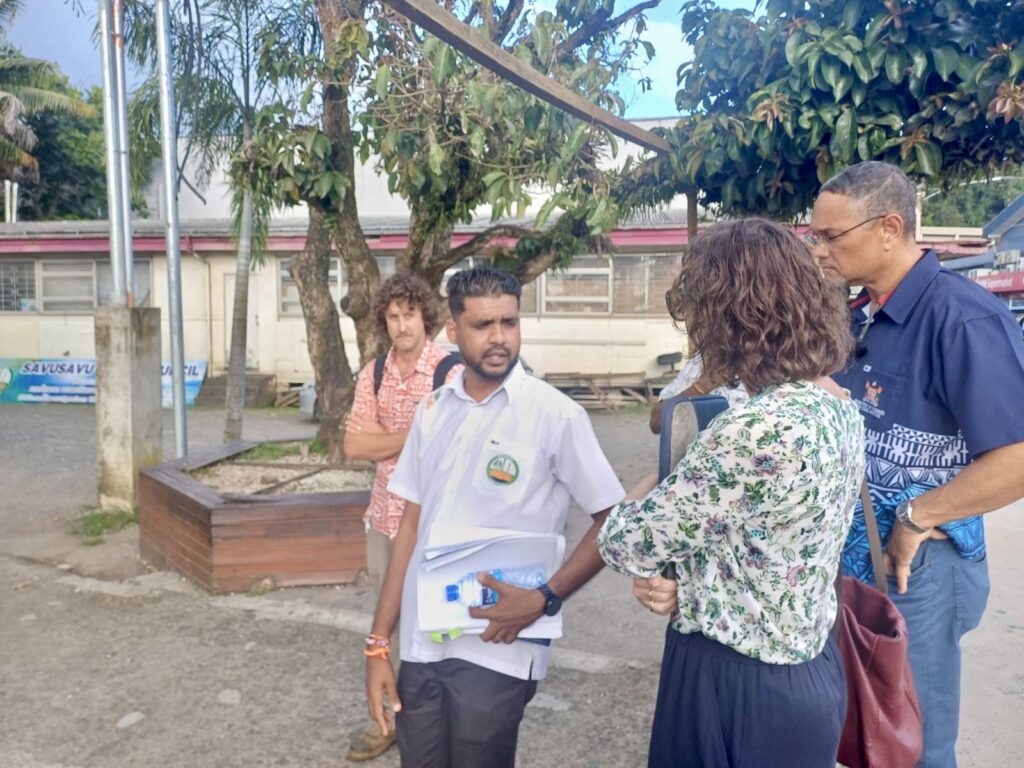
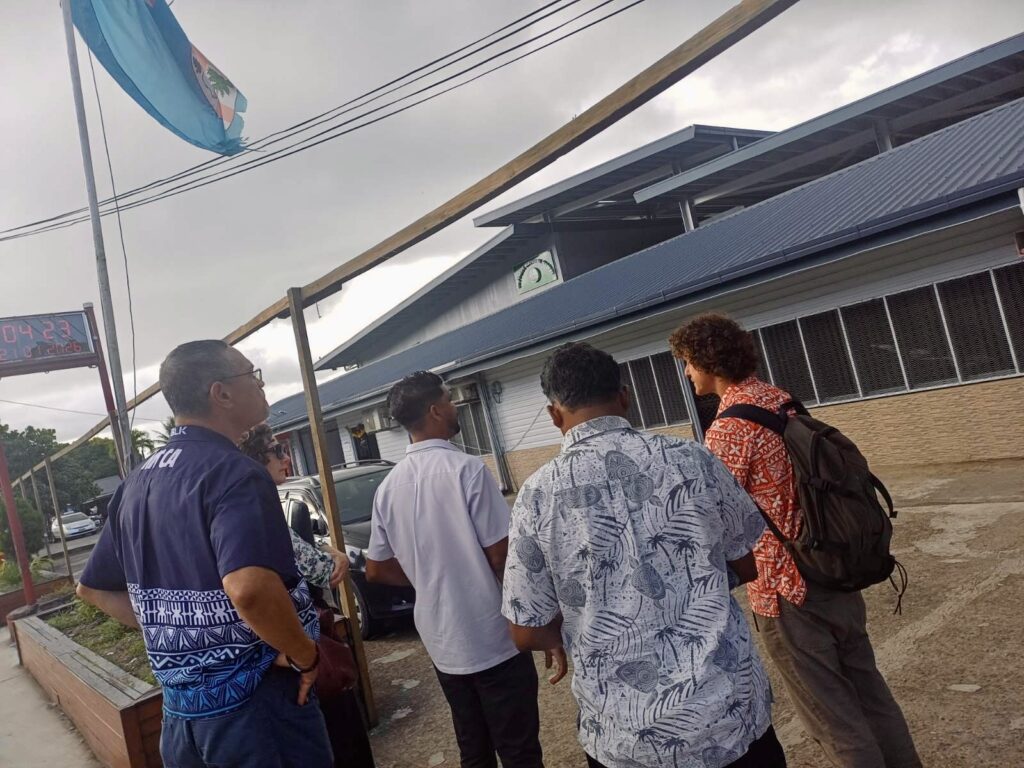
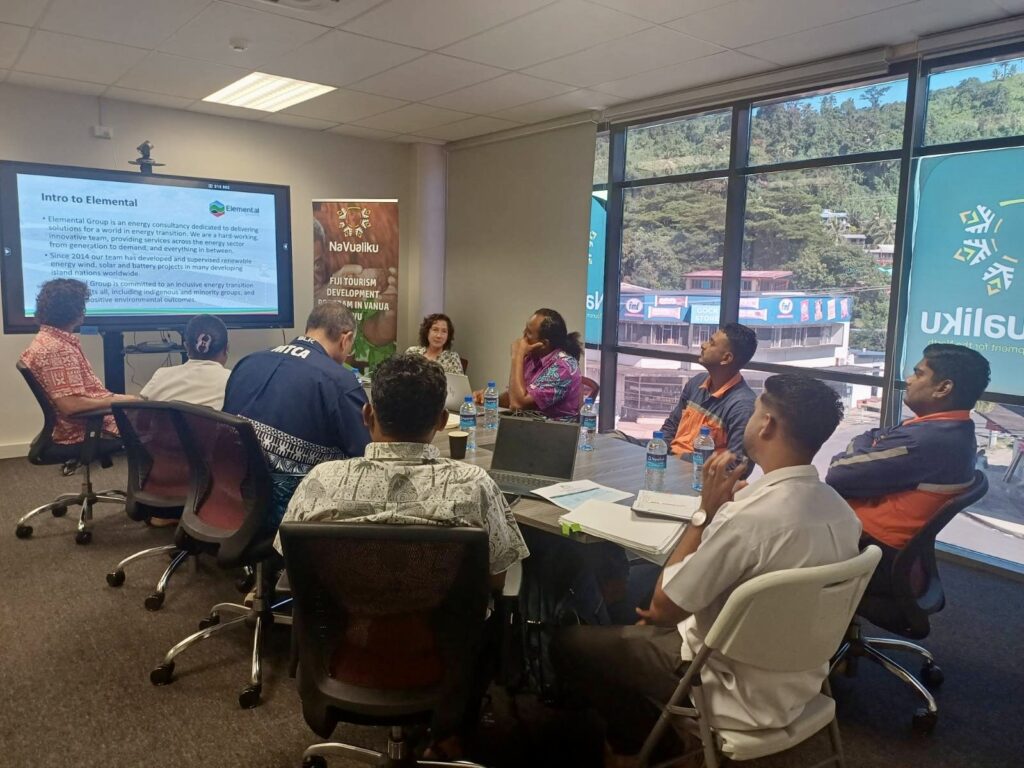
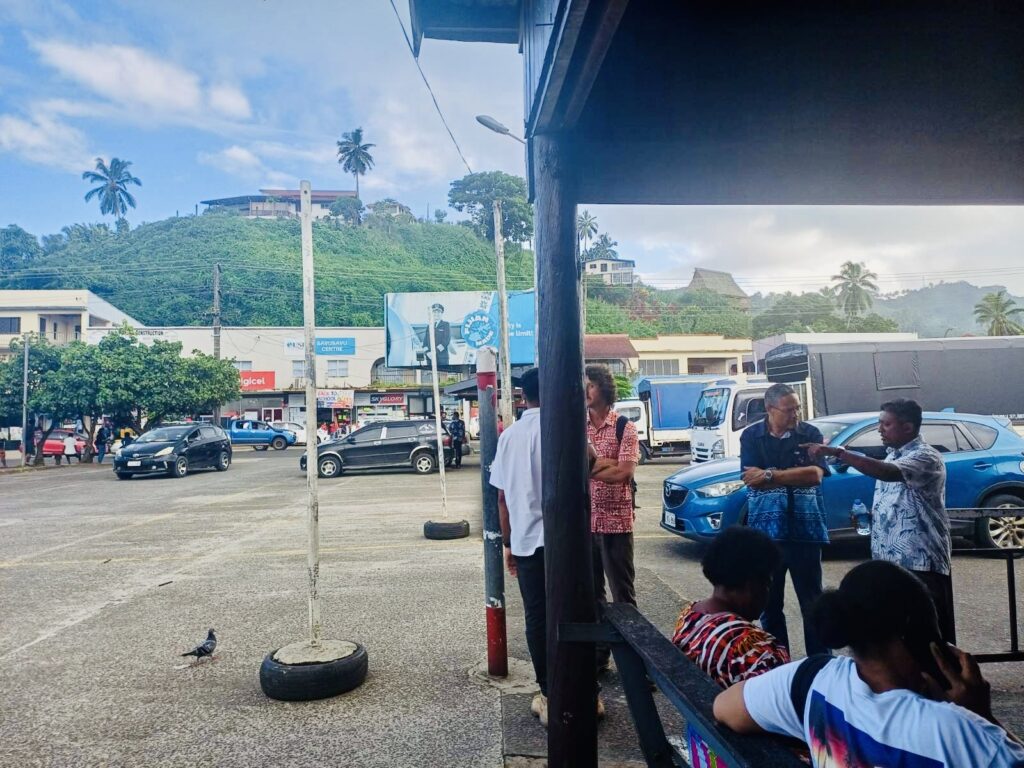
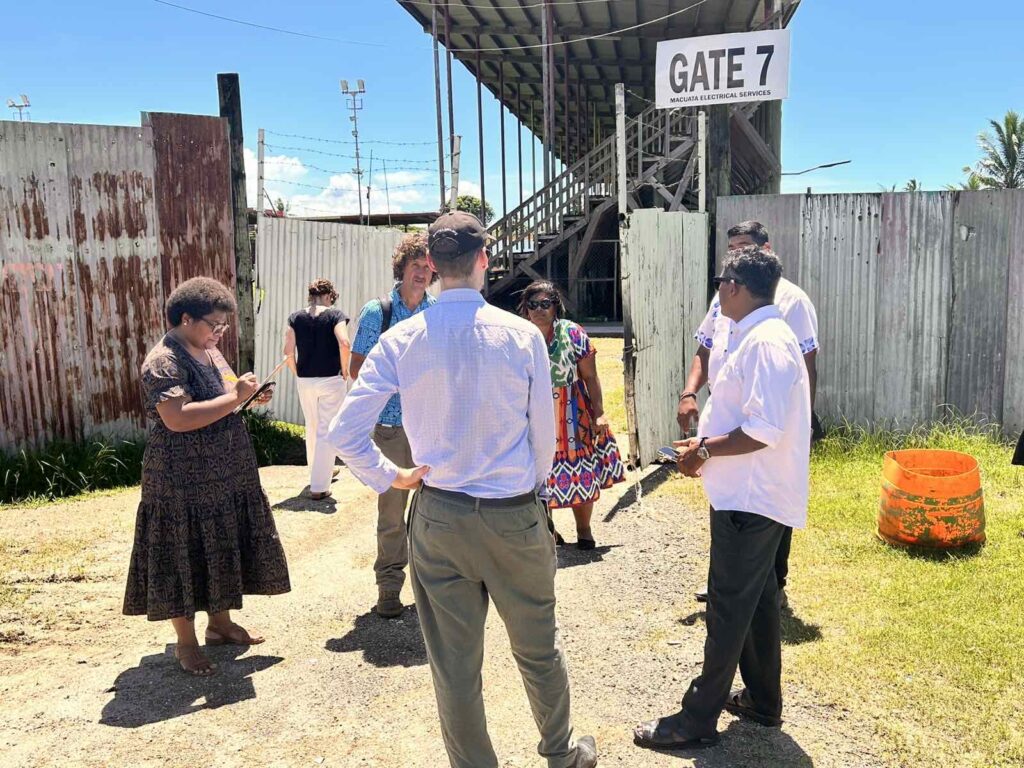
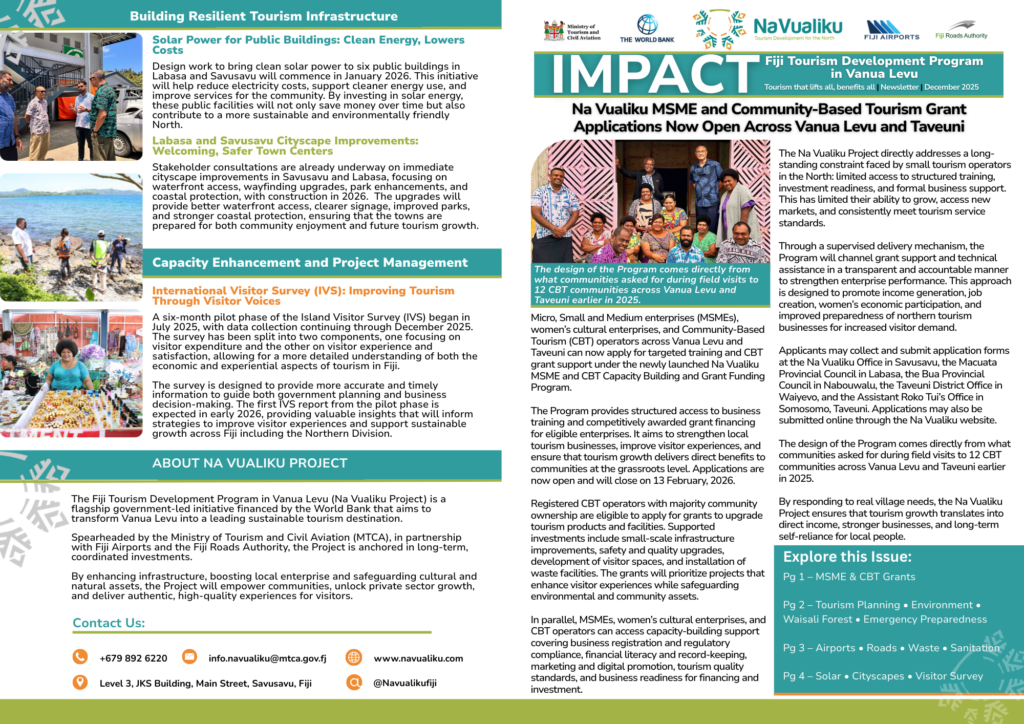
🚧 The Na Vualiku Project and the WorldBank team, as part of the 5th Implementation Support Mission, joined the Fiji Roads Authority and WAPCOS to review progress on the Labasa–Savusavu road upgrade and coastal protection works.
This will improve road safety, add scenic stopping points, and make Vanua Levu more accessible for visitors and communities.
The coastal protection measures will also help safeguard the road and nearby villages against climate change impacts such as erosion and flooding.
Significant efforts are underway to transform Savusavu – including installation of CCTV cameras and more foot patrols by Police to improve safety, proper landfill and a centralised sewerage treatment plant and parking meters in the town.
This has been highlighted by Minister for Local Government, Maciu Nalumisa during the debate on Consolidated Review Report of the Savusavu Town Council 2014 and 2015 Annual Reports.
He says to strengthen the approach on drug-related issues, the Council has conducted meetings with the Divisional Police Commander Northern and the Officer in Charge of Savusavu Police Station regarding police visibility in town, especially on weekends, and increasing foot patrols in hotspot areas.
Nalumisa says the Council has provided a location for a new police post in town.
The Minister further says that under the Na Vualiku Project, funded by the World Bank, they have identified a proposed site in the Savudrodro area for a proper landfill in Savusavu and a budget of $6.75 million has been allocated.
He says a feasibility study will be conducted by environmental consultants.
Nalimisa also says that a centralised sewerage treatment plant is also part of the Na Vualiku Project and relevant stakeholders and the working group are collaborating to ensure the project is implemented efficiently.
He further says the Ministry has also consented to the redevelopment of Ratu Ganilau Park in partnership with the Fiji Sports Council where terms and conditions have been discussed by both parties.
The Minister says the Council will continue to explore public-private partnerships.
Nalumisa also says that as of 30 June 2025, the Town Council has collected 71.31 percent of the rates that were in arrears, and as part of efforts to boost revenue, 10 digital parking meters have been procured for Savusavu Town, with plans approved but awaiting gazetting.
The Ministry of Local Government is working closely with the Savusavu Town Council to strengthen the beautification efforts.
Speaking in Parliament, Minister Maciu Nalumisa highlighted that beautification is a key component of the NaVualiku Tourism Program.
He says a full-time officer has been appointed to lead these initiatives.
The project is funded by the World Bank, and the Council is looking for a suitable site for landfill in the Savusavu.
He says $6.75 million has been allocated for solid waste management and the landfill project, spanning from Savusavu to Labasa.
“This initiative is also one of the components of the NaVualiku Tourism Project. Environmental stakeholders and the working group are working closely to ensure that this project is carried out efficiently and effectively.”
Assistant Minister for Transport, Naisa Tuinaceva, echoed similar sentiments, stating that Savusavu town can be a tourism hub.
“Despite the modest population of around 6,000, Savusavu stands as an entry point for Vanua Levu’s tourism. With high-value resorts, it is a hotspot for Fiji’s tourism.”
NaVualiku Tourism Program aims to enhance the infrastructure in Savusavu that will create more jobs by attracting tourists.
The Ministry is also developing a tourism master plan for Savusavu in line with the Blue Town model.
Fiji’s tourism earnings remain uneven, with most benefits limited to a few regions.
Deputy Prime Minister and Tourism Minister Hon. Viliame Gavoka says Vanua Levu accounts for less than four percent of visitor-days, despite the country welcoming over one million visitors last year.
The government wants to change this and is targeting $4 billion in tourism earnings and 1.25 million visitor arrivals by 2027.
“Denarau sees 22 percent of arrivals, Coral Coast 21 percent, Nadi – 17 percent, Suva-Tailevu – 13 percent, Mamanuca Islands – 10 percent and Yasawas – 4 percent. However, less visited regions, like Vanua Levu, receive less than four percent of visitor-days. This is where our growth focus is next.”
Gavoka said an integrated tourism master plan for Vanua Levu was in progress and will guide development in the Northern Division.
This year’s funding will support the design phase for key upgrades. In addition, we will launch Na Vualiku pilot MSME programme this calendar year, offering cost-shared business development services, small grants to community-based tourism groups, and targeted support for women, cultural enterprises, and operators to enhance market readiness and resilience.
The Minister adds that a tour of the Lau Group is also planned in the coming months as part of efforts to expand tourism across Fiji.
Na Vualiku MSME program to boost North tourism this year – Gavoka
Proposed development of airport in Yasawa
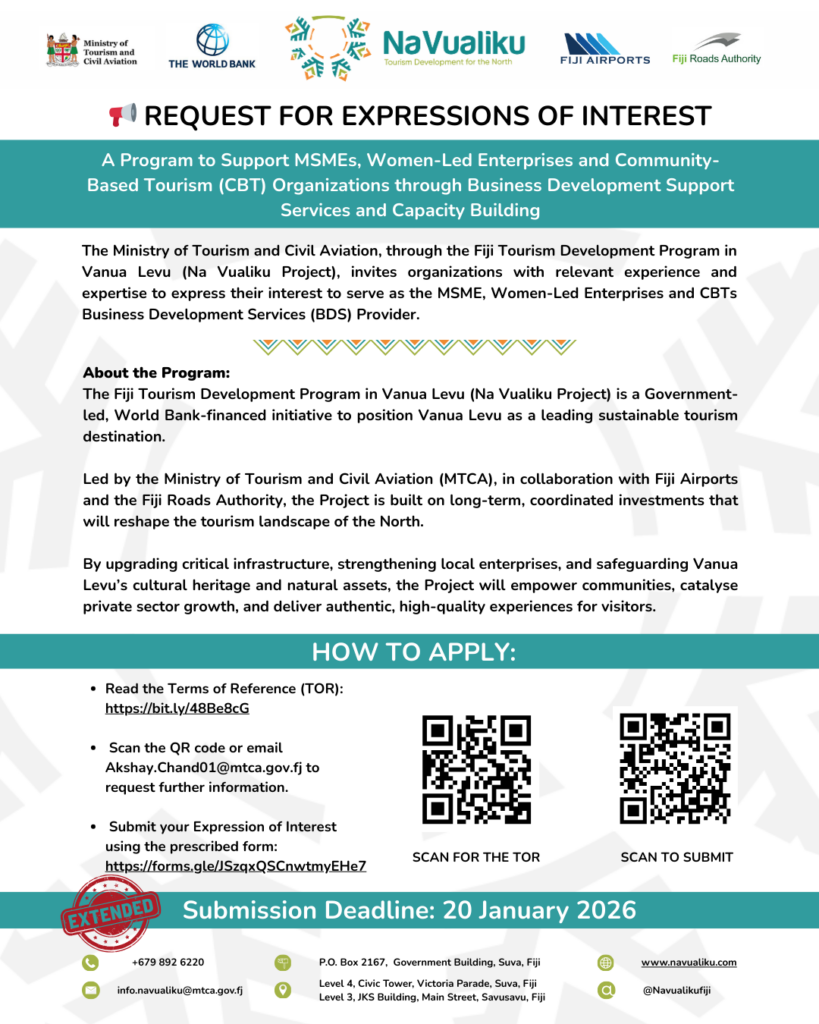
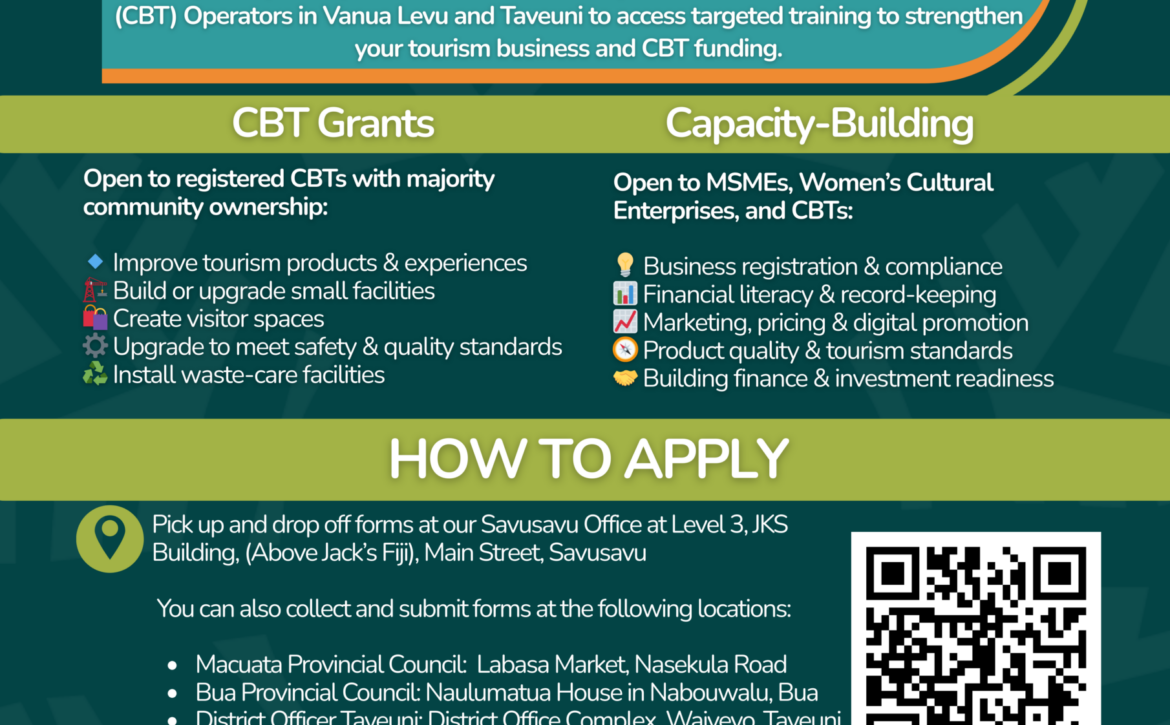
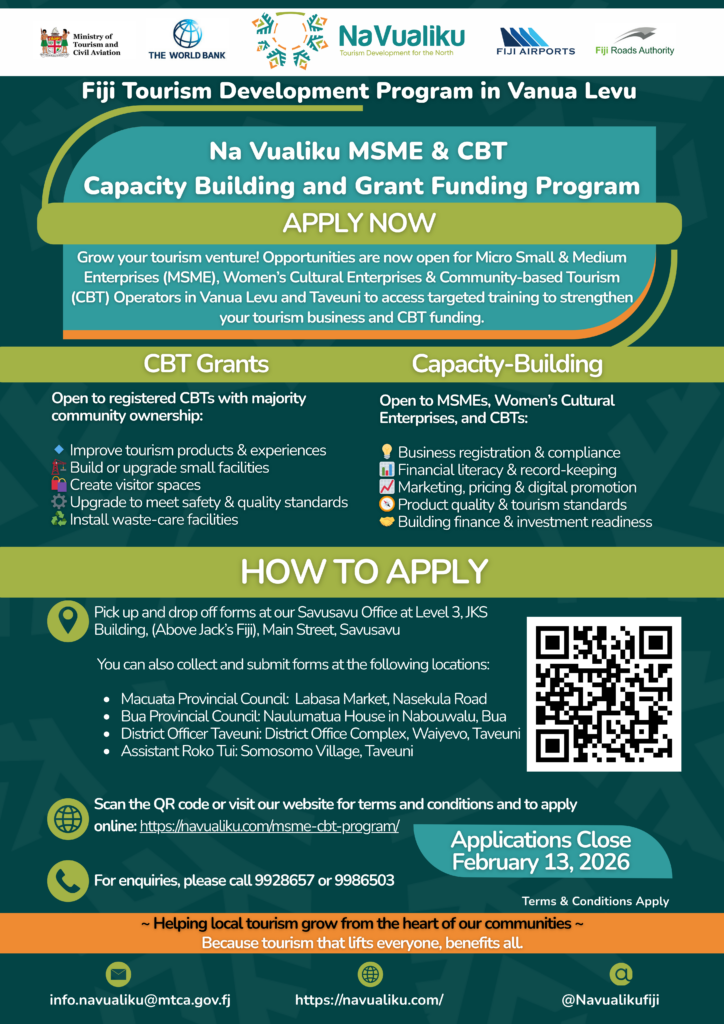
MSMEs in the Northern Division are expected to get a boost as the Na Vualiku Pilot MSME program will be launched this calendar year, offering cost-shared business development services, small grants to community-based tourism groups, and targeted support for women, cultural enterprises, and operators to enhance market readiness and resilience.
This has been confirmed by Deputy Prime Minister and Minister for Tourism, Viliame Gavoka while supporting the 2025-2026 National Budget.
He says they are unlocking the Northern Division’s tourism potential—and ensuring that its people participate meaningfully in the industry’s growth.
Gavoka says $30 million has been allocated to the Na Vualiku Program, funded in partnership with the World Bank.
The Deputy Prime Minister further says in the first five months of this year alone, Fiji received 350,000 visitors, and we remain on track despite global challenges.
He says the most visited regions in Fiji are Denarau with 22 percent of visitor numbers, followed by the Coral Coast at 21 percent, Nadi at 17 percent, Suva/Tailevu at 13 percent, the Mamanuca Islands at 10 percent, and the Yasawas at 4 percent.
Gavoka further says in line with their commitment to expanding air connectivity to underserved locations within Fiji, the Coalition Government will undertake a feasibility study for the proposed development of a new airport in the Yasawas.
He says they are anticipating its potential to boost tourism, improve access for local communities, and contribute to national development.
He also confirmed that they are developing Fiji’s first-ever Civil Aviation Master Plan and they have begun a comprehensive review of the Civil Aviation Act 1976 which will be completed in the new financial year.
Vanua Levu, home to the vibrant towns of Savusavu and Labasa, has long been one of Fiji’s best-kept secrets. With emerald peaks, vibrant coral reefs, and a deeply rooted cultural heritage, the island offers an experience unlike anywhere else in the country. Yet despite its natural beauty, Vanua Levu has remained just out of reach for many, held back by limited and costly flight options.
Unlike Viti Levu, Fiji’s main tourism and business hub, Vanua Levu has faced challenges with infrastructure and transport links.
For travellers and locals alike, getting to and from the island has often been a challenge, slowing tourism growth, deterring investment, and limiting opportunities for communities across the north.
That is starting to change.
Thanks to the World Bank-financed Fiji Tourism Development Program in Vanua Levu (Na Vualiku Project) with the Ministry of Tourism and Civil Aviation as the lead implementing agency, a new chapter is taking flight.
Taveuni, known as the soft coral capital of the world, is one of Fiji’s natural treasures and a growing draw for eco-tourism.
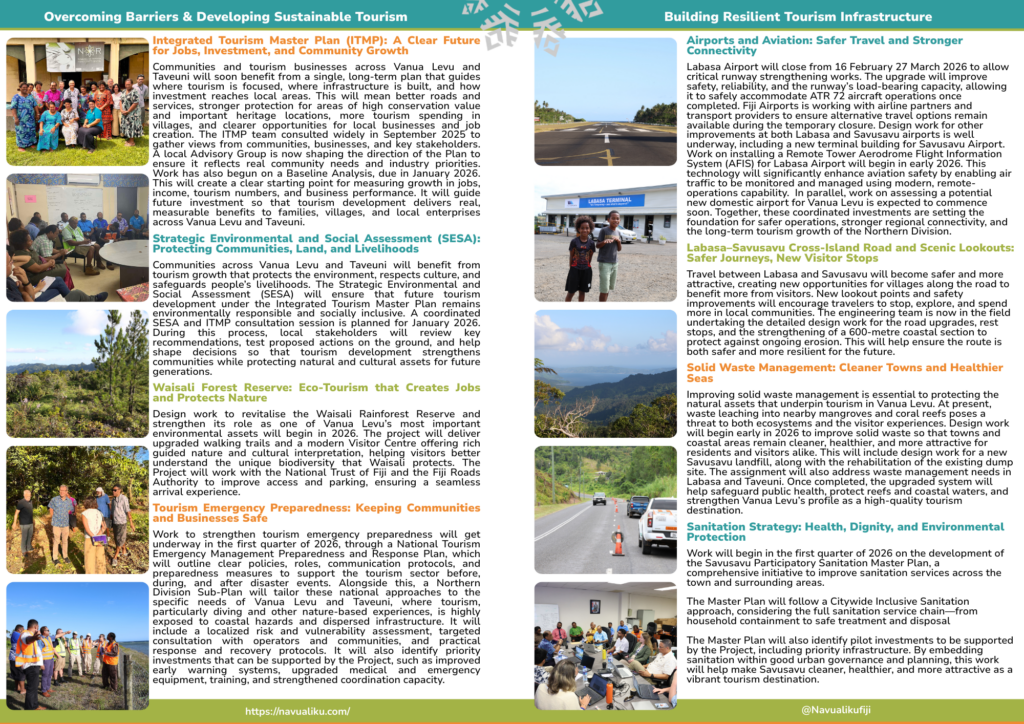
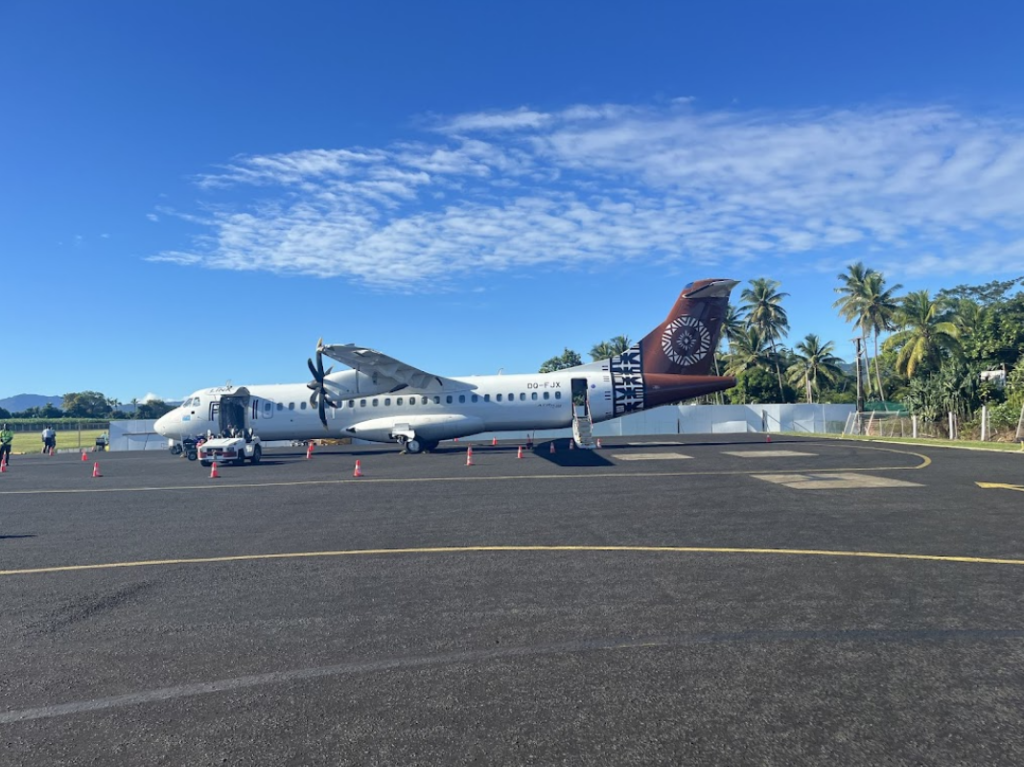
A Fiji Airways aircraft at Labasa’s Waiqele Airport which is set to benefit from significant upgrades under the Project.
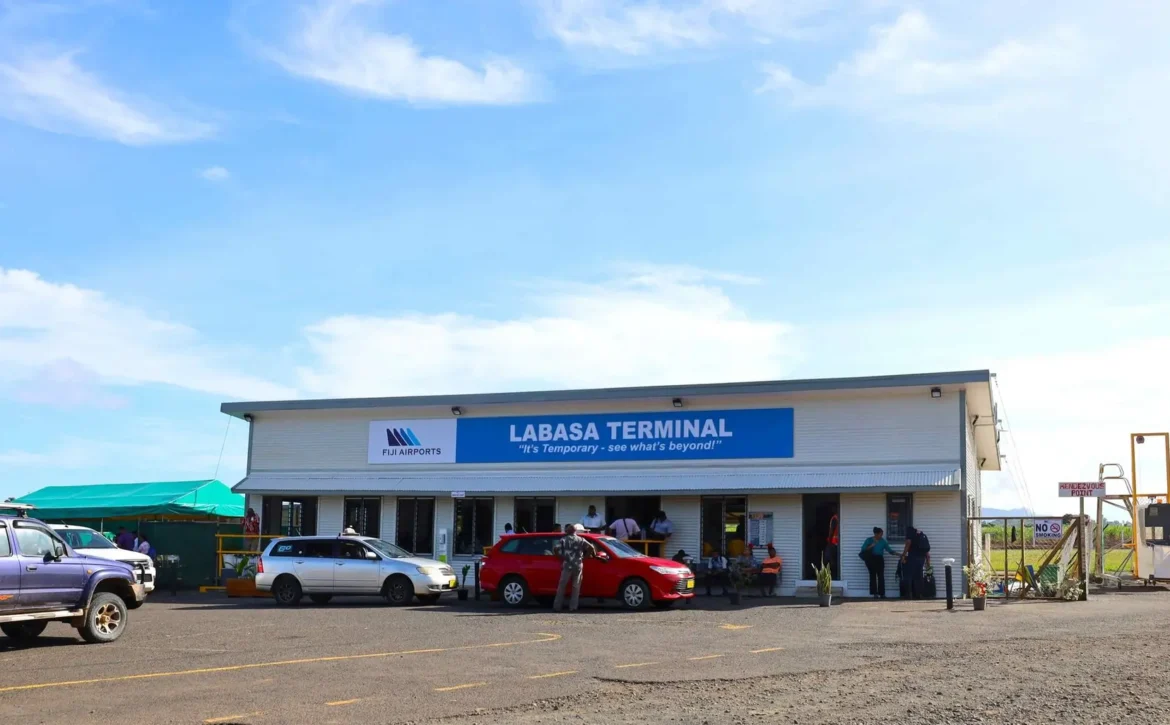
Recently, the Na Vualiku team together with Airports Fiji representatives, travelled to Savusavu and Labasa to engage with local stakeholders and share updates on upcoming activities to transform Vanua Levu’s air and road connectivity landscape.
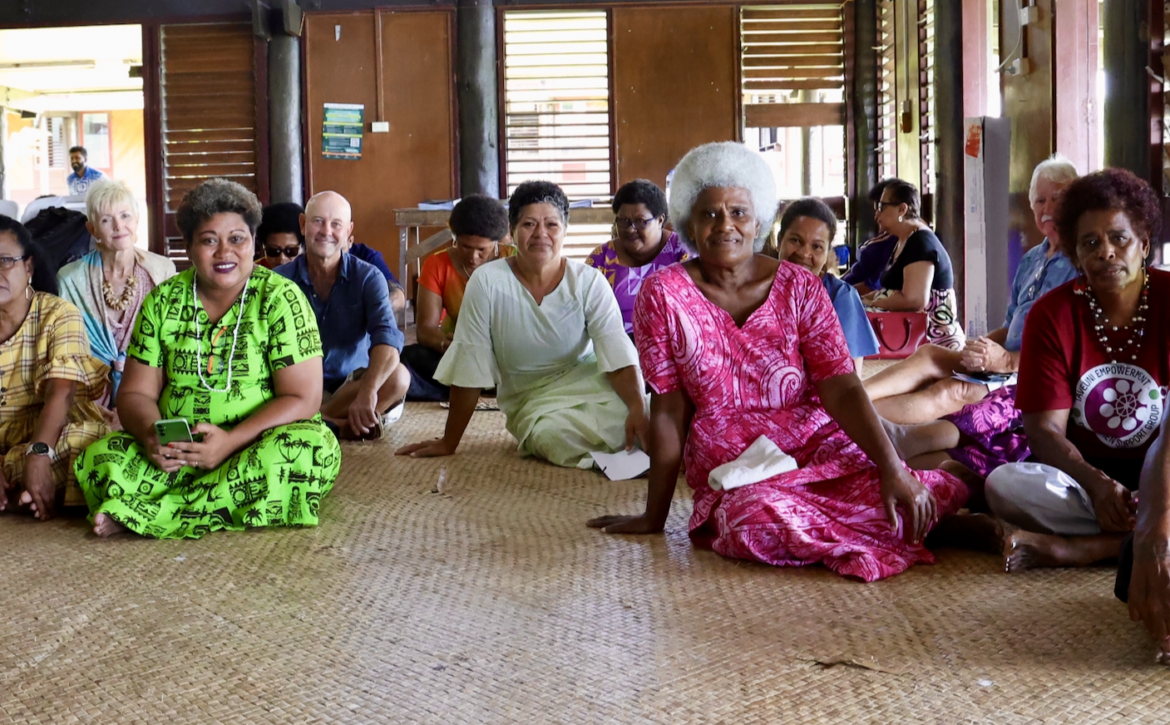
Na Vualiku Project team engages with Savusavu’s tourism operators to share plans and gather local insights.
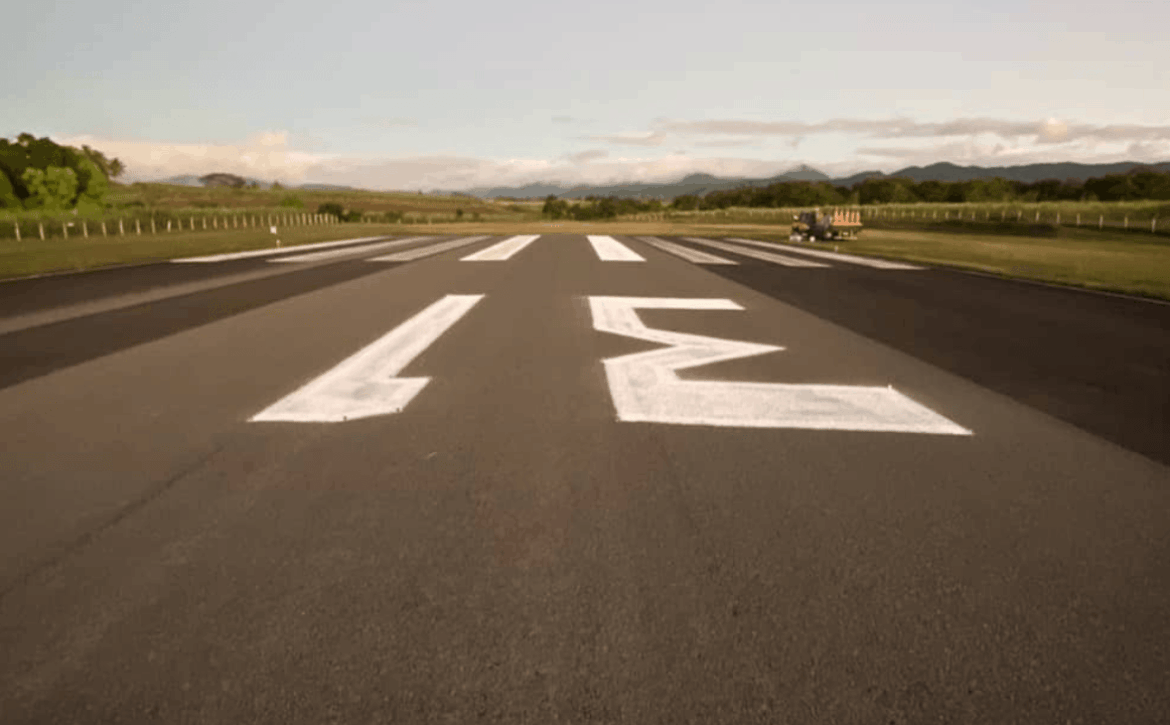
In Labasa, a range of upgrades is planned to complement the new terminal building and perimeter fencing being installed by Fiji Airports. These include runway improvements, a study into a potential runway extension, a new integrated fire station and car park, an enhanced access road, better drainage and stronger embankments.
Labasa Airport will also see the installation of a Remote Tower Aerodrome Flight Information System (AFIS), a state-of-the-art, camera-based air traffic system digitally connected to Fiji Airport’s Nadi control centre.
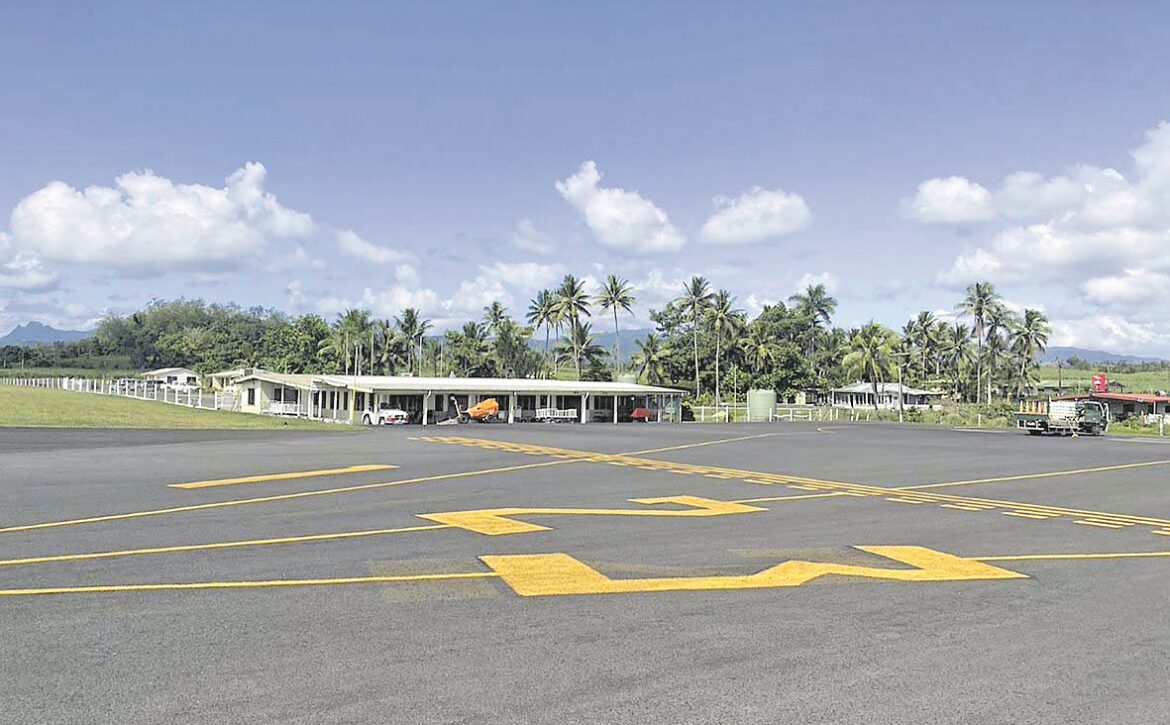
In Savusavu, a brand-new terminal and car park is being designed to reflect Vanua Levu’s distinct identity and sense of place.
Front exterior of Savusavu Airport terminal
Supporting infrastructure upgrades include improving the runway pavement, construction of a new integrated fire station, reinforce seawalls, and improve stormwater drainage.
In Taveuni, a study will inform future development, including a master plan to explore the possibility of servicing larger aircraft (50–72 seat turboprops) and determine the timeline for future capital investments.
Resilience works are being designed to safeguard key infrastructure in Savusavu from coastal impacts.
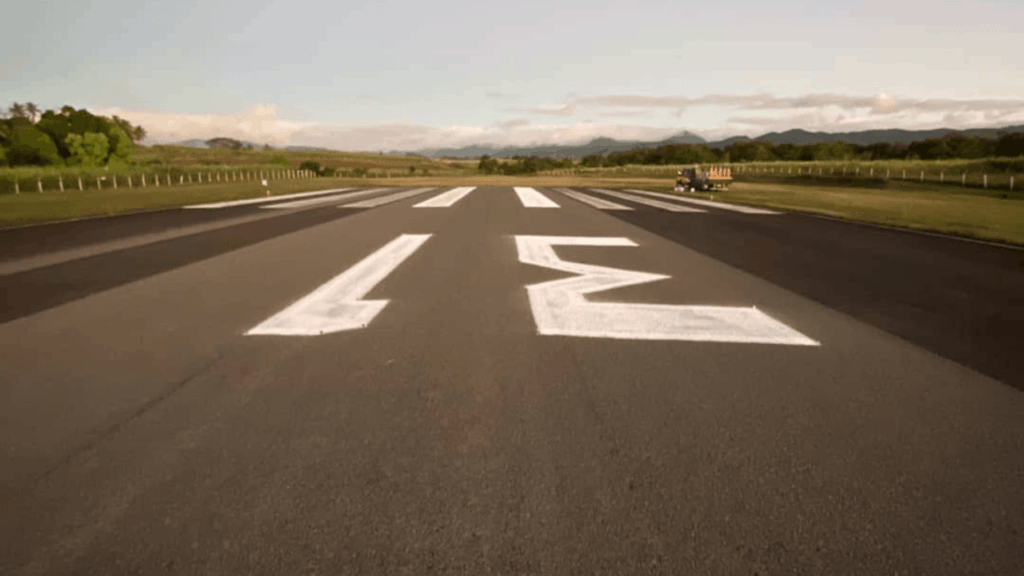
Taveuni’s lush landscape and iconic waterfalls offer a unique adventure experience. Project engineers and aviation officials inspect Labasa Airport’s runway as part of planning for critical upgrades.Savusavu’s runway will be resurfaced and supported by upgraded drainage and seawall infrastructure.
At the heart of this transformation is the proposed development of a new domestic airport for Vanua Levu.
Following consultation and a detailed pre-feasibility study, four sites, one in Nasarawaqa and three closer to Savusavu, have been shortlisted from an initial pool of 19 locations for a detailed feasibility study.
These sites offer strong potential to host either a 1,200-metre domestic runway on 70 hectares, or a 3,000-metre runway on 240 hectares that would allow potential to service larger aircrafts in the future. The study is expected to finish by April 2026, with a recommended site to be presented to the Government of Fiji.
Recognising that connectivity doesn’t end at the runway, the Project will also improve the critical cross-island road linking Labasa and Savusavu via Seaqaqa.
Road safety, travel time, and reliability will be enhanced, supported by a climate-informed accident database to guide ongoing maintenance and upgrades.
This is more than just infrastructure.
It’s a transformation, one that could unlock Vanua Levu’s full potential and usher in a new era of prosperity for Fiji’s northern region.
Now, the wheels are starting to turn and the runway is clear for take-off.
The Ministry of Tourism, in partnership with the World Bank, has allocated $30 million to fund the “Na Vualiku Project.”
Deputy Prime Minister and Minister for Tourism and Civil Aviation, Viliame Gavoka, stated in Parliament recently.
He says that this is in line with a core theme of the national budget, the Project places strong emphasis on infrastructure as a driver of sustainable growth.
Gavoka adds the plan to launch a “Na Vualiku” Pilot MSME program, set to offer cost-shared business development services.
It will also provide small grants to community-based tourism groups, and targeted support for women, cultural enterprises, and operators to enhance market readiness and resilience.
The tourism minister says that they are unlocking the Northern Division’s tourism potential—and ensuring that its people participate meaningfully in the industry’s growth.
Investment Fiji is looking beyond traditional markets and tapping into exciting new demand from Asia, North and Central America even South America, says board chairperson Jenny Seeto.
Speaking at the Asia Pacific Hotel Industry Conference & Exhibition (AHICE) Pacific Islands event in Nadi this week, Ms Seeto said Investment Fiji aimed to create an inclusive tourism industry that uplifts communities, protects the environment and leaves a lasting impact.
“We are on a digital transformation trajectory, the National Digital Strategy goals and the landing of the Google Bulikula and Tabua subsea cables are both crucial in positioning Fiji to be a regional digital hub in addition to Fiji being the hub of the Pacific,” Ms Seeto said.
She said Investment Fiji was guided by a 10-year framework designed to revitalise and future-proof our industry, with sustainability, resilience and inclusivity as our foundation pillars.
“Every investment, every project and every policy has to consider our people, our planet and the future of travel.
“We’re especially excited about the Na Vualiku Project in the North, with the support of the World Bank, a major $US200 million (approx $F448m) investment is being channeled into infrastructure development in our Northern region.”
Ms Seeto said that included roads, reliable power, water systems, waste management and better airport access.
“In the context of tourism, Investment Fiji focuses on promoting various types of tourism to attract foreign investment and create opportunities for economic growth which includes sports tourism, medical tourism and adventure tourism.
“The Government is offering attractive incentive tax packages for tourism related industries and other sectors of the economy.”
Note: This article was first published on the print version of the Fiji Times dated June 28, 2025
President, Ratu Naiqama Lalabalavu has expressed his full support and confirmed his willingness to do his part in the implementation of the Vualiku project that will commence soon in Vanua Levu.
The President welcomed a courtesy visit from Deputy Prime Minister and Minister for Tourism, Viliame Gavoka, and his delegation, acknowledging the significance of collaborative efforts in advancing sustainable tourism and economic development in the region.
They say their purpose of the visit was to brief the Head of State on the implementation of the World Bank-funded Fiji Tourism Development Program in Vanua Levu, known as the ‘Na Vualiku’.
The Na Vualiku Project aims to strengthen targeted infrastructure and essential services, enhance coordination and encourage private sector participation in tourism and improve the environmental sustainability of tourism assets.
President Ratu Naiqama Lalabalavu has backed a major World Bank-funded initiative aimed at strengthening sustainable tourism development in Vanua Levu.
The President was briefed on the Na Vualiku Project during a courtesy call from Deputy Prime Minister and Minister for Tourism and Civil Aviation Viliame Gavoka at State House yesterday.
The Na Vualiku Project aims to improve infrastructure, boost private sector engagement, and promote environmental sustainability across targeted tourism sites in the Northern Division.
The project aims to strengthen infrastructure and essential services, improve environmental sustainability, and promote private sector engagement in the tourism sector.
The Ministry of Tourism and Civil Aviation is leading implementation, with support from the Fiji Roads Authority, Fiji Airports Limited, and the Savusavu Town Council.
Key investments include resilient infrastructure, nature-based attractions, and improved waste and sewage systems.
The initiative also seeks to empower Fijian women in the tourism industry.
The President also welcomed the update and reaffirmed his full support for the project.